

International Economic Reports and Stock Exchange Coverage
The global financial landscape is a complex web of interconnected stock market news, commodity fluctuations, and macroeconomic shifts. We provide the granular detail required to understand how a policy change in Washington D.C. can impact trading floors in Singapore and Tokyo. This archive serves as a repository for deep-dive reports on the S&P 500, currency movements, and the broader global economy. Our mission is to transform raw financial reports into actionable intelligence for the sophisticated investor.
Beyond the S&P 500: Reading the Global Index Landscape
While the S&P 500 remains a primary barometer for global risk appetite, our coverage extends well beyond a single American benchmark. We track the Nikkei in Tokyo, the DAX in Frankfurt, and the Hang Seng in Hong Kong to capture the full picture of international equity flows. Each index reflects distinct industrial compositions and regional sensitivities, and comparing them reveals where capital is actually moving.
Our reports analyze sectoral shifts within these markets — how technology, healthcare, and industrials perform relative to one another across regions. A rally in semiconductor stocks on the Nasdaq may echo in Tokyo's tech-heavy listings, while energy sector moves in Houston can shift the weighting of resource-heavy indices in emerging Asia. Understanding these cross-border currents is essential for any investor with exposure beyond a single domestic market.
We provide context on price-to-earnings ratios, dividend yields, and corporate earnings seasons that define the long-term health of the equity landscape. We also track the flow of capital from developed to emerging markets, identifying when institutional investors are rotating into higher-growth jurisdictions or retreating to safe-haven assets during periods of stress.
Index Coverage Scope
- S&P 500 and broader US equities
- Nikkei 225 and Asian Pacific indices
- DAX and European sector benchmarks
- Hang Seng and Greater China markets
- Emerging market index tracking
What We Track Daily
- Price-to-earnings ratio movements
- Dividend yield shifts by sector
- Earnings season results and guidance
- Capital flow between regions
- Developed-to-emerging rotation
Central Bank Policy and the Cost of Capital
Interest rate decisions from the Federal Reserve and the European Central Bank dictate the cost of capital worldwide. When the Fed tightens, liquidity contracts across emerging markets as dollar-denominated debt becomes more expensive to service. When the ECB loosens, European equities and sovereign bonds reprice accordingly. These are not isolated domestic events — they are global liquidity events.
We break down the minutes from central bank meetings to forecast potential shifts in monetary policy. The language matters as much as the rate decision itself: a hawkish tone can move markets before any actual change occurs. Our analysis focuses on how inflation targets and employment data influence the decisions of central bankers in Washington, Frankfurt, Tokyo, and Singapore.
By monitoring these high-level trends, we help our readers understand the likely direction of the global economy over the coming quarters. Central bank policy sets the floor and ceiling for virtually every other asset class — equities, bonds, currencies, and commodities all dance to this rate.

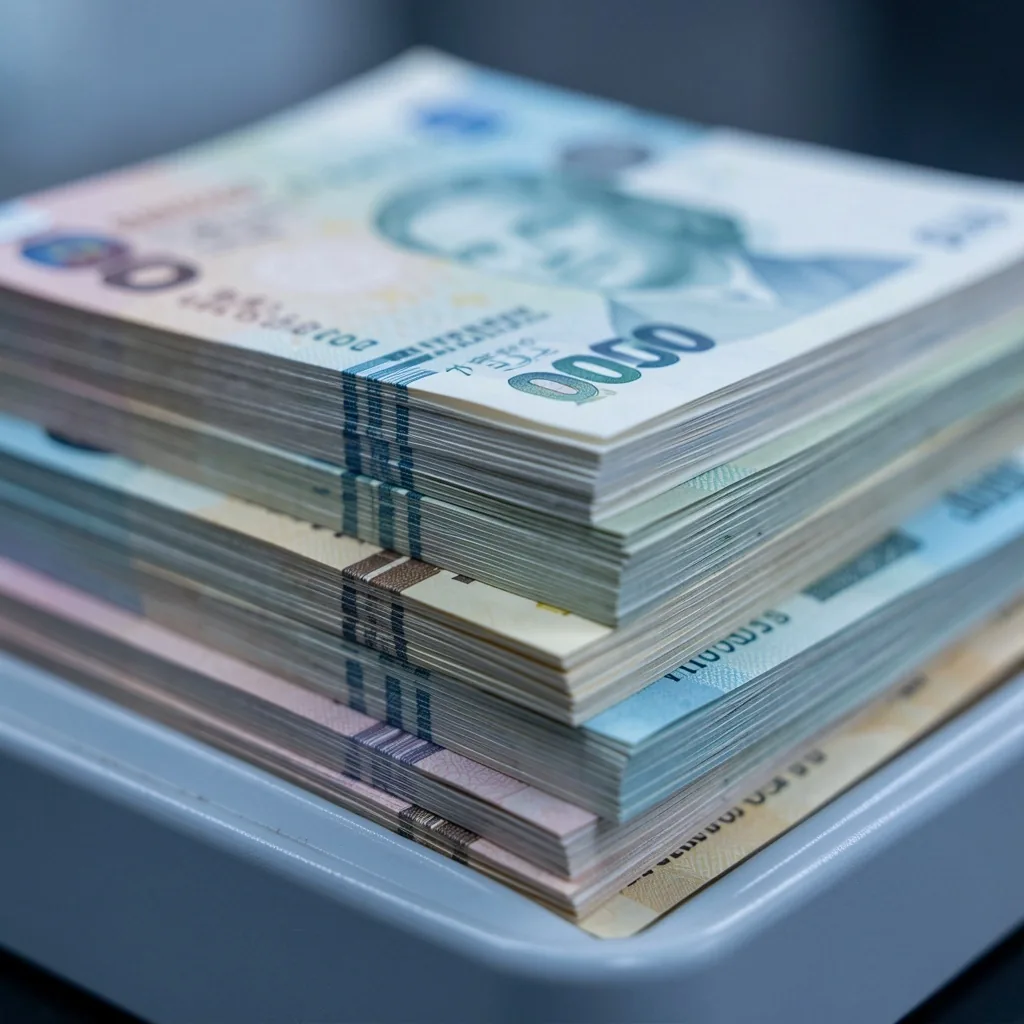
Foreign Exchange and Currency Volatility
The FX market is the largest and most liquid financial market in the world, influencing everything from international trade to the price of imported goods. Daily turnover dwarfs the combined volume of every stock exchange on the planet, and the flows that move it — trade balances, interest rate differentials, political stability — are the connective tissue of the global economy.
We provide detailed trading analysis on major pairs like EUR/USD, GBP/JPY, and pairs involving the Singapore Dollar. The SGD in particular serves as a bellwether for Southeast Asian trade flows, managed by the Monetary Authority of Singapore through a unique basket-band system rather than a conventional interest rate target.
Our reports examine how geopolitical tensions and trade balances affect currency strength. This section is vital for businesses and investors who need to hedge against currency risk in an unstable political environment — where a single tariff announcement or a diplomatic breakdown can erase months of careful portfolio positioning.

Gold, Oil, and the Industrial Metals Driving the Transition
Commodities often serve as a leading indicator for industrial demand and inflationary pressure. We track the price of Brent Crude, WTI, and gold to provide a snapshot of the global energy and hedge markets. A sustained rise in crude often precedes broader inflation readings by weeks, while gold's inverse relationship to real interest rates makes it a barometer for monetary policy expectations.
Our industrial metal coverage, including copper and lithium, focuses on the materials driving the green energy transition. Copper wiring, lithium batteries, and nickel alloys are the physical inputs of electrification — their prices reflect how quickly the world is actually moving away from fossil fuels, not just how quickly politicians promise to.
By analyzing supply chain disruptions and OPEC+ production decisions, we offer a comprehensive view of the commodity sector. When a pipeline is sabotaged or a mining strike shuts down a major copper operation, the ripple effects reach equities, currencies, and bond yields within hours. Our job is to trace those connections.
Fixed Income and Bond Market Analysis
The bond market often signals economic trouble long before the stock market reacts.
We monitor treasury yields, corporate bond spreads, and sovereign debt levels to assess market risk. When the yield on a 10-year US Treasury drops below the 2-year — an inverted yield curve — it has preceded every American recession of the past half-century. It is the closest thing the financial world has to a reliable warning system.
Our reports explain the implications of inverted curves and what they mean for the probability of a global recession. We also track credit spreads between investment-grade and high-yield corporate debt, which widen when investors begin pricing in default risk. A sudden spike in spreads can signal stress in a specific sector before any earnings report confirms it.
For the conservative investor, this section provides the data needed to evaluate the safety and return of fixed-income instruments. Whether allocating to sovereign bonds for capital preservation or to corporate debt for yield enhancement, understanding the risk landscape is the difference between income and loss.
Geopolitical Impact on Global Trade
Political instability and trade wars can disrupt even the most stable financial plans. We analyze how sanctions, tariffs, and diplomatic shifts affect global supply chains and multinational corporations. A tariff imposed on semiconductor imports doesn't just raise prices for electronics manufacturers — it reshapes investment decisions across an entire industry.
Our coverage includes the impact of regional conflicts on shipping lanes and energy prices. When a major maritime chokepoint becomes impassable, insurance rates on cargo spike, shipping costs multiply, and the inflationary effects propagate through every economy that depends on imported goods — which is nearly all of them.
By connecting political events to market reactions, we provide a holistic view of the risks inherent in international investing. The investor who reads the political landscape alongside the financial statements is the one who avoids being blindsided.

The Role of Emerging Economies
Emerging markets often offer higher growth potential but come with significant risks. We profile the economic development of nations across Southeast Asia, Africa, and Latin America — looking past the headline GDP figures to examine the structural reforms, infrastructure investment, and demographic shifts that actually determine whether a market is rising or merely attracting hot money.
Our reports look at foreign direct investment trends and the growth of the middle class in these regions. A country with a young, urbanizing population and rising disposable income is a fundamentally different investment proposition from one with an aging demographic and capital flight. We help you tell the difference.
We evaluate the stability of local currencies and the transparency of regional stock exchanges to help you assess the viability of these markets. A high-growth economy with a chronically depreciating currency can still destroy returns for foreign investors who fail to account for the exchange-rate translation.
Corporate Earnings and Sector Performance
Quarterly earnings reports provide the most direct insight into the health of individual companies. We summarize the results of major global players, highlighting beats, misses, and — critically — the forward guidance that executives provide alongside the numbers. A company can beat its quarterly target and still see its stock fall if it signals weaker demand ahead.
Our sector performance analysis identifies which industries are leading the market and which are lagging. When energy outperforms technology for several consecutive quarters, that rotation tells a story about the macro environment that no single earnings report can convey alone.
This bottom-up approach complements our macro reporting, giving you a detailed view of the corporate landscape. We connect what individual companies report to the broader trends we track in indices, currencies, and commodities — so the micro and macro pictures reinforce each other rather than appearing in isolation.
ESG and Sustainable Investing
Environmental, Social, and Governance criteria are becoming central to institutional investment strategies. We report on how global markets are adapting to new sustainability reporting requirements — regulatory frameworks that are forcing publicly listed companies to disclose climate risks, supply chain labor conditions, and board governance structures that were previously voluntary.
Our analysis looks at the performance of green bonds and socially responsible funds compared to traditional benchmarks. The question is not only whether these instruments deliver on their ethical mandate, but whether they deliver competitive financial returns — or whether investors are paying a premium for a label.
We investigate the reality behind corporate sustainability claims to help you avoid greenwashing in your portfolio. When a company publishes a net-zero pledge, we look at the actual capital expenditure behind the promise — not just the press release.
Derivatives and Risk Management Tools
Options, futures, and swaps are essential tools for managing institutional risk. We provide educational content and market reports on how these instruments are being used in global markets today — from airlines hedging fuel costs with crude oil futures to pension funds using interest rate swaps to manage duration risk.
Our trading analysis includes a look at the VIX — the Volatility Index — and other sentiment indicators that measure the market's expectation of future turbulence. A low VIX suggests complacency; a sharp spike often marks the opening chapter of a correction. Reading these signals is part science and part pattern recognition.
Understanding these complex products is key to protecting a portfolio against sudden market downturns or unexpected events. Derivatives are not speculative luxuries — for institutional investors, they are the difference between absorbing a shock and being broken by one.
Questions About Our Coverage
Answers to the questions investors ask most about what we track and how we publish.
Why does Chile Diario focus so heavily on the S&P 500?
As the most followed index in the world, the S&P 500 sets the tone for global risk appetite, which directly impacts markets in Singapore and beyond. When the S&P 500 sells off in a single session, Asian indices often gap lower at the next open. Tracking it is not a preference for American markets — it is a recognition of how global capital actually flows.
How often are the financial reports updated?
Our global market reports are updated daily, with major deep-dives published following significant economic announcements or market closes. When a central bank decision lands or a critical earnings report crosses the wire, we aim to have contextual analysis published within the same trading cycle.
Do you cover small-cap international stocks?
While we focus on major indices, our sector reports often highlight significant movements in mid-cap and small-cap companies that signal broader trends. A small-cap supplier winning a major contract can be an early indicator of a sector rotation that large-cap stocks have not yet reflected. We surface those signals when they matter.
Continue Your Market Research
For deeper technical analysis, cryptocurrency market coverage, or educational resources on trading fundamentals, explore the related sections of our platform.
12 Marina Boulevard
Marina Bay Financial Centre Tower 3
#17-01, Singapore 018982
Phone: +65 6715 6630
Email: [email protected]
Monday – Friday
09:00 – 18:00 SGT